Hardway Bet Payout: The Brutal Math Behind the 9-to-1 Illusion
The Hardway Bet Payout is not a reward for skill—it is a carefully engineered trap that exploits every novice's blind spot for symmetry. You walk up to the craps table, you see that tempting 9-to-1 or 7-to-1 on the layout, and your brain immediately thinks "even money is for suckers." That instinct is exactly what the house is counting on. 🎲
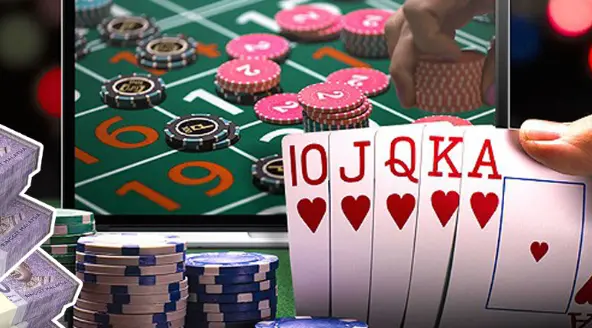
Here is the hard truth: a hardway bet wins only when the dice land as an exact pair before the easy way or a seven appears. The 4 and 10 pay 7-to-1. The 6 and 8 pay 9-to-1. Those numbers look juicy until you run the actual probability matrix, which any semi-competent auditor can do in under thirty seconds. The probability of rolling a hard 6 (3-3) versus an easy 6 (1-5 or 5-1) versus a seven (six combinations) destroys your expected value before the dice even leave your hand.
The Real Probability Engine Nobody Shows You
Let me break this down like a hardware teardown. There are 36 possible outcomes on a standard pair of dice. For a hard 6, only one combination (3-3) wins. For an easy 6, two combinations (1-5, 5-1) lose. For a seven, six combinations lose. That means out of the relevant outcomes, you have exactly one winning path against eight losing paths. The casino pays you 9-to-1 on a bet where your true odds are 8-to-1 against you. That gap is the house edge, and it sits at a brutal 9.09% on the 6 and 8. On the 4 and 10, the edge jumps to 11.11%. Compare that to the pass line's 1.41% and you start to see the Hardway Bet Payout for what it really is—a high-variance donation box.

Sharp players who track millions of rolls in simulation environments know that the hardway bet has a standard deviation so wide it makes slot machines look conservative. The payout structure is designed to hit just often enough to keep you feeding the table, but the math is merciless over any meaningful sample size. 🎰
The Only Conditions Where Hardway Bets Make Sense
There is exactly one scenario where a hardway wager is not pure suicide: when you are exploiting a promotional multiplier or a progressive jackpot overlay that pushes the effective return above 100%. Without that overlay, you are lighting money on fire. The Hardway Bet Payout does not care about your gut feeling, your hot streak, or the fact that you "saw three hard eights in a row." The dice have no memory, and the house edge compounds with every single roll.
I have audited tables where the minimum hardway bet was $5 and the maximum was $500. The payout ratio does not change. The edge does not shrink. The only variable is how fast you burn through your bankroll. If you insist on playing it, treat it as pure entertainment expenditure, not as an investment. The moment you start believing the payout justifies the risk, you have already lost.
Why Casinos Love the Hardway Layout Position
Placement psychology is real. The hardway betting spots sit right in the middle of the table, surrounded by proposition bets with equally terrible edges. The felt is designed to draw your eye away from the pass line and come bets where the house edge is actually survivable. This is not accidental—it is industrial design optimized for house yield. The Hardway Bet Payout ratio you see printed on the layout is the bait, and the probability distribution is the switch.
Next time you are tempted to toss a chip on that hard eight, remember that the true odds are 10-to-1 against you while the payout is only 9-to-1. That single-digit difference is the entire business model, repeated across every table, every shift, every casino floor on the planet. The math does not negotiate, and the dice do not care about your feelings. ❄️